
Why Is European Roulette Best for Players? The Mathematical Superiority Explained
🎰 Among all roulette variants available in modern casinos, European Roulette consistently emerges as the optimal choice for informed players. This isn't mere preference — it's a mathematically quantifiable advantage rooted in probability theory and house edge analysis. The single-zero wheel layout fundamentally alters the risk-reward equation in favor of the player, making it the gold standard for serious wagering strategies.
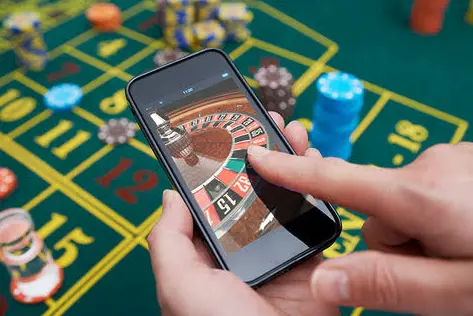
The Single-Zero Architecture and House Edge Reduction
European Roulette features a 37-pocket wheel numbered 0 through 36, with the zero appearing only once. This single-zero configuration yields a house edge of precisely 2.70% on standard even-money bets. Compare this to the American variant, which introduces a double-zero pocket — 38 total pockets — inflating the house edge to 5.26%. That differential represents a near-doubling of the casino's mathematical advantage, translating to significantly accelerated bankroll erosion over extended play sessions. For the disciplined bettor, this distinction is not academic; it directly impacts expected value calculations across every spin.
Probability Distribution and Payout Efficiency
The payout structure of European Roulette reflects a more equitable distribution relative to true odds. A straight-up wager on a single number pays 35:1, while the actual probability stands at 1/37. The discrepancy — the house's commission, so to speak — is narrower than any other mainstream table game. When you evaluate the return-to-player ratio, European Roulette delivers an RTP of 97.30%, a figure that outperforms American Roulette's 94.74% and rivals the most favorable blackjack and baccarat configurations available in land-based and digital casinos alike.

Strategic Implications for Bankroll Management
🎯 Experienced players understand that European Roulette accommodates a broader spectrum of betting systems without disproportionately punishing variance. The absence of the double-zero pocket eliminates the notorious "house pocket" effect that skews American wheels. Martingale, D'Alembert, and Fibonacci progressions all operate with reduced risk exposure on the European layout. Furthermore, the availability of the En Prison and La Partage rules in select European tables can halve the house edge to a remarkable 1.35% on even-money wagers — a concession virtually unheard of in the American format.
Psychological and Practical Advantages
Beyond raw mathematics, European Roulette fosters a more transparent and predictable gaming environment. The wheel's clockwise and counterclockwise alternating number sequence prevents clustering effects that can occur on double-zero wheels. The table layout is symmetrical and intuitive, reducing cognitive load during rapid decision-making. 🎲 For players employing complex inside-outside betting combinations, this clarity translates to fewer errors and more precise execution of intended strategies. The game's enduring popularity across Monaco, Macau, and London's Mayfair establishments attests to its refined balance of chance and calculated risk.
Technological Integration in Digital Platforms
Modern online casino platforms have optimized European Roulette for live-dealer streaming, random number generation certification, and multi-camera wheel tracking. These technological enhancements ensure provable fairness while preserving the tactile authenticity that purists demand. The single-zero wheel's compatibility with high-speed automated play and real-time statistical overlays further cements its position as the preferred variant for data-driven players who monitor spin histories and sector frequency distributions. 🌟 When selecting a roulette table, the presence of a single zero on the felt should be your non-negotiable criterion for optimal expected value.